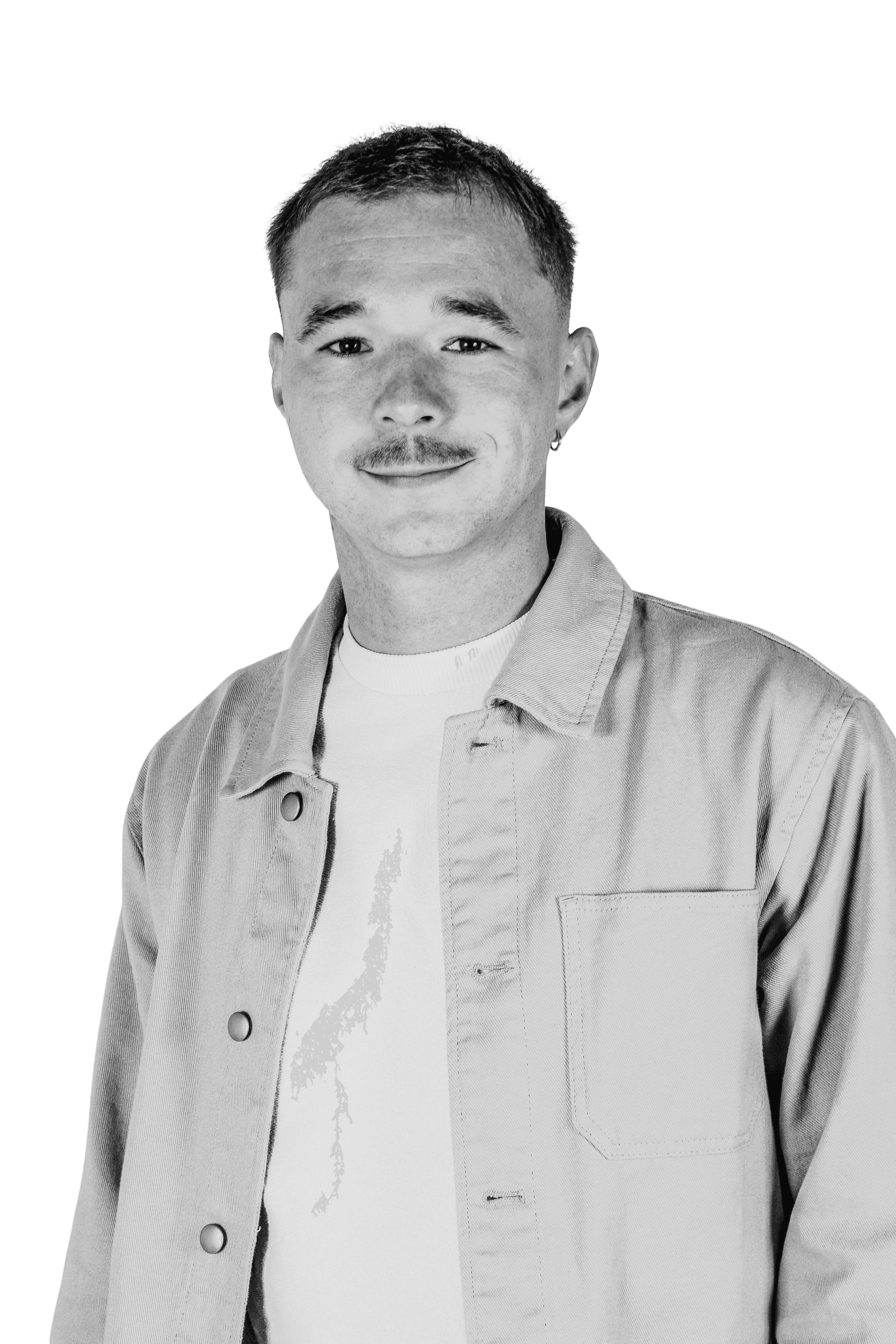
I am now an ATER at the Sport department of Le Mans Université, where I am working on embodied decision-making and predictive control.

"We were not born to think. We were born to move." — Koziol et al. (2012)
This idea sits at the core of how I approach decision-making. Rather than treating cognition as something that happens "before" and separately from action, I study the two as inseparable: our movements, such as a hand reaching, a sprinter's anticipatory lean or a goalkeeper diving before the ball arrives, carry the trace of the decision process itself, often before we could report it in words.
A dual PhD between Rouen Normandy and Chieti–Pescara gave me a foundation spanning sport science and behavioral/cognitive science. A postdoctoral fellowship with Giovanni Pezzulo's team at ISTC-CNR (Rome) sharpened my focus on predictive processing and active inference. I now continue this work as an ATER at Le Mans Université (STAPS), in an environment where perception-action coupling is studied directly in the context of skilled movement and sport.
What ties this trajectory together is a conviction: that if we want to understand how people decide, we have to look at how they move while deciding — and eventually, be able to formalize that process in models that make predictions, not just descriptions.
Russo, M., Chaigneau, A., Pezzulo, G.
2026

Chaigneau, A., Moretti, R., Iodice, P., Pessiglione, M., Pezzulo, G.
2026

Chaigneau, A., Borozan, M., Pezzulo, G., De Liberato, S., Palumbo, R. and Iodice, P.
2025


A multiplayer economic game pitting financial reward against social power, to ask which one people actually chase — and what the hesitation in their mouse movements reveals about the answer.
A two-player grid-based game where dyads have to coordinate, without talking, to collect a shared set of colored gems as efficiently as possible. *(Ongoing project — data collection and analysis in progress.)*
A virtual ball-catching game in which players intercept moving targets under manipulated gravity and visual occlusion, designed to test whether the brain predicts hidden motion using built-in physical priors.
A research-based reinterpretation of the classic Flappy Bird, used to study when and why people choose to keep trying — or give up — in effortful, goal-directed tasks.